mrtywms06's pick · Updated August 2026
Fender Jazz Bass
Loading photo
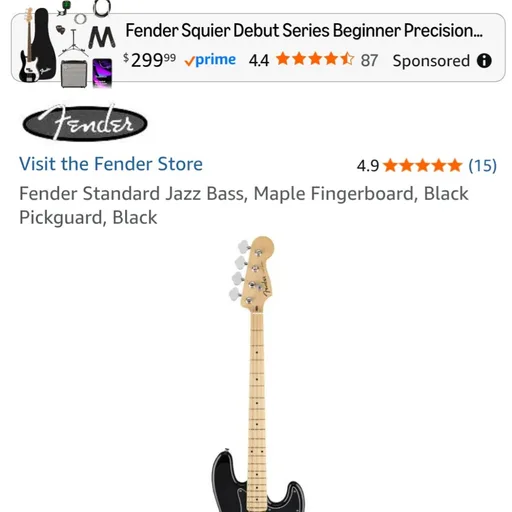
The Fender Jazz Bass is a natural fit for players who want a familiar electric bass shape, a wide range of tones, and a model with a long place in recorded music. It may also suit someone choosing their first serious bass, because the Jazz Bass format is common enough that setup advice, replacement parts, and playing guidance are easy to find. That matters more than people sometimes admit. A bass that has plenty of support around it can be easier to live with than one that only looks good on paper.
Part of the appeal is how flexible the platform is supposed to be. A Jazz Bass is often chosen by players who want something that can cover clean practice, band rehearsal, and a range of styles without forcing one fixed sound. If you are comparing basses, the main thing to think about is not only the name on the headstock but how the neck shape, pickup layout, and control setup line up with the way you actually play. Some players prefer a slimmer neck and a responsive feel under the left hand. Others may want a thicker profile or a simpler control layout. That is worth sorting out before committing.
One tradeoff to check is fit in your hands and on your strap. Even within the same model family, the feel can change enough that one player finds it comfortable and another finds it more demanding over a long session. It is also worth verifying whether the standard pickup configuration and control scheme match the sound you want without extra adjustment. A bass can be famous for being versatile and still be the wrong tool if you want only one specific voice.
The safest evidence posture here is to treat this as a well-known category rather than a promise of performance. The Jazz Bass has a reputation for versatility and broad use, but the useful question for a buyer is how this particular version is built, set up, and priced relative to other basses in the same range. Look closely at the fretwork, neck relief, balance, tuning stability, and how easy it is to get the sound you want without fighting the controls. Those details tell you more than the logo does.
This may fit a player who wants a classic bass shape with enough flexibility to handle different styles, or someone who wants a widely supported platform that is easy to research and maintain. It may be less appealing to a buyer who already knows they want a very specific sound or a radically different neck feel. As a choice, it makes the most sense when you want a dependable starting point and you are comfortable checking the build details before you buy. That is usually the right way to approach a bass with this much history behind it.
Amazon product links on this guide are not currently affiliate links. Neither mrtywms06 nor Buyer Field Guide earns an affiliate commission from them.
See current price